
The Future of the Intelligent Guestroom: Security, Access, and the Guest Experience
In the modern hospitality landscape, the guestroom door lock is no longer just a mechanical necessity—it is the gateway to a digital ecosystem. As the industry shifts toward "intelligent guestrooms," the integration of advanced access control, Artificial Intelligence (AI), and the Internet of Things (IoT) is redefining how hotels operate and how guests interact with their environment.
The Shift to Frictionless Access

The traditional check-in process is undergoing a radical transformation. Current data suggests that 60 percent of guests now prefer mobile keys over traditional plastic cards. By leveraging Bluetooth Low Energy (BLE) or Near Field Communication (NFC), mobile access allows guests to bypass the front desk entirely, moving straight from their arrival to their room.
This evolution isn’t just about convenience; it’s about operational security and sustainability. Mobile keys integrated into digital wallets (like Apple Wallet or Google Pay) offer a higher tier of encryption than standard Magstripe or RFID cards, which are easily demagnetized or duplicated. Furthermore, by reducing the reliance on PVC plastic, hotels are making significant strides in their ESG (Environmental, Social, and Governance) commitments.
AI and IoT: Beyond the Door Lock

Once the door is unlocked, the room itself takes over. The modern "intelligent room" uses IoT sensors to anticipate needs. Approximately 69 percent of travelers now expect personalised services to enhance their stay.
When a guest opens the door, the room’s GuestRoom Management System (GRMS) can:
Adjust lighting to preset scenes.
Set the HVAC system to a specific temperatures based on guest presence or activity.
Sync the Smart TV with the guest’s streaming profiles.
This level of personalization is supported by AI assistants that act as digital concierges. With 81 percent of guests seeking personalized recommendations, AI can suggest dining options based on past behavior or offer late check-outs to those arriving on late-night flights, all without human intervention.
Operational Efficiency and Sustainability
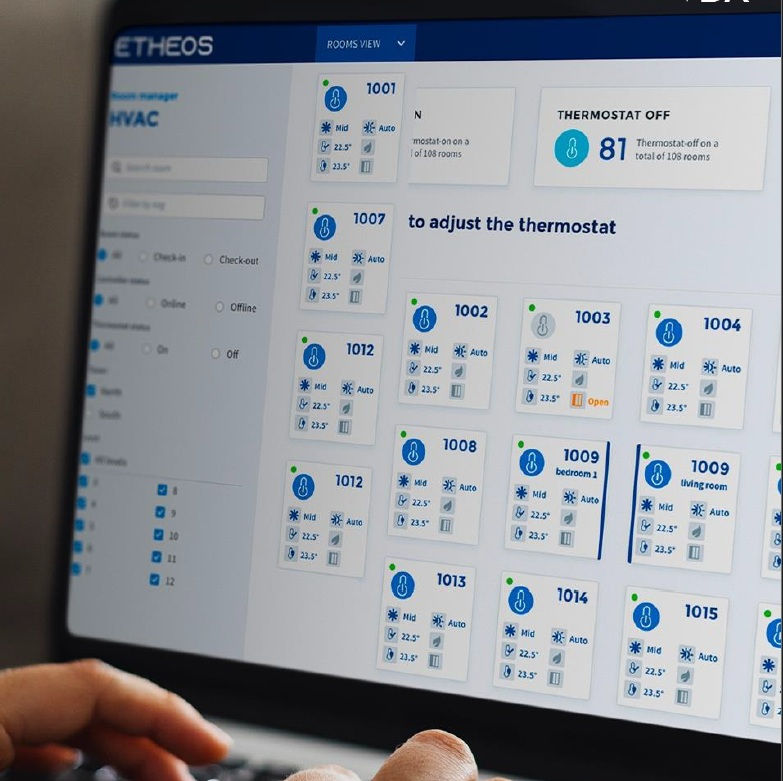
The marriage of Access Control and Energy Management Systems (EMS) is perhaps the most significant "silent" benefit of this technology. By communicating with the door lock, IoT-enabled sensors, thermostats, and lighting systems know exactly when a room is vacant. This allows for real-time adjustments that can lower room energy costs by as much as 40 percent, providing a massive boost to the bottom line while reducing the property's carbon footprint.
TL;DR: Key Takeaways
Mobile-First Entry: 60% of guests prefer mobile keys, reducing front-desk friction and plastic waste.
Personalization is King: 81% of guests want AI-driven personalized recommendations and automated room settings.
Sustainability: IoT integration with energy systems can reduce property energy costs by up to 20%.
Operational Relief: AI-driven concierges handle routine tasks, allowing staff to focus on high-value guest interactions.
Future-Proofing: Smart infrastructure is no longer a luxury but a competitive necessity in the global hotel market.
External References & Further Reading
To stay ahead of these trends, consider exploring these industry-leading resources:
Hospitality Technology (HT): A premier source for latest trends in hotel PMS and security integrations.
Oracle Hospitality Insights: Research on how cloud-based PMS systems are enabling the "plug-and-play" of IoT devices.
Stayntouch - The State of Contactless Check-In: Deep dives into the ROI of mobile-first guest journeys.
Assa Abloy Global Solutions: Technical whitepapers on the evolution of BLE and NFC mobile access security.
Frequently Asked Questions (FAQ)
Q: Are mobile keys more secure than physical keycards?
A: Yes. Mobile keys utilize the security protocols of the smartphone (biometrics, PINs) and high-level encryption, making them much harder to compromise than traditional RFID or magnetic stripe cards.
Q: Does implementing "Smart" rooms mean I need to replace all my wiring?
A: Not necessarily. Many modern IoT and access control solutions are "retro-fittable," utilizing wireless protocols like Zigbee or Z-Wave to communicate without the need for extensive rewiring.
Q: How does AI improve the workload of my hotel staff?
A: AI handles "low-touch" requests—such as "what is the Wi-Fi password?" or "send up extra towels"—allowing your team to focus on "high-touch" guest service and complex problem-solving.
Q: What is the guest's biggest concern with smart room technology?
A: Data privacy is the primary concern. Hotels must ensure that any data collected (like temperature preferences) is stored securely and used strictly to enhance the guest experience, adhering to regulations like GDPR or PDPA.


Comments